ON CLARITY

We are living through an extraordinary expansion of knowledge. Every day, more information is published than any individual could consume in a lifetime. Every industry has become richer in data, products, experts and opinions. Medicine, beauty, nutrition, finance, education—we have built remarkable ecosystems of knowledge.

Yet something curious has happened.

As our information ecosystems have grown more sophisticated, many people have not become more confident. They have become more uncertain.

We often assume that better decisions emerge naturally from better information. Increasingly, I wonder if the opposite is becoming true.

Every new technology, every new product, every new expert and every new platform adds another voice to the conversation. Collectively they create abundance. Individually they create choice.

But abundance is not the same as clarity.

Modern life asks us to navigate ecosystems that have become too complex for any one person to fully understand. Healthcare, investing, parenting, beauty, longevity—each has become a world unto itself, complete with its own language, incentives and competing truths.

The challenge of our time may no longer be acquiring knowledge. It may be developing the ability to orient ourselves within complexity.

Clarity is often mistaken for certainty. They are not the same.

Certainty closes questions. Clarity helps us ask better ones.

In medicine, this distinction matters deeply.

Patients rarely arrive without information. They arrive carrying articles, videos, recommendations, algorithms and opinions gathered over months or years. Their challenge is not ignorance. It is synthesis.

The physician’s role is changing. It is no longer enough to be a source of information. Information has become abundant. Increasingly, our value lies in helping people make sense of it.

To identify signal from noise. To distinguish possibility from probability. To understand not only what can be done, but what is worth doing.

I suspect this shift extends far beyond medicine.

The institutions that earn trust over the coming decades may not be those that produce the greatest volume of information.

They may be those that provide the greatest clarity. Perhaps this is what expertise increasingly means. Not possessing more answers. Helping others navigate complexity with wisdom, restraint and perspective.

In a world overflowing with information, clarity may become one of our rarest resources.

And perhaps one of our most valuable.

Certainty closes questions. Clarity helps us ask better ones

DR SONAM YADAV
The End of Anti-Aging

For decades, one phrase shaped the beauty industry.

“Anti-aging.”

It belonged to an era that viewed youth as the ideal and aging as something to resist.

The phrase made sense at the time. It reflected remarkable scientific progress and a growing belief that we could influence how we looked and, increasingly, how we aged. In many ways, it represented optimism.

Today, however, the conversation feels different.

People are still interested in looking their best. They still care about healthy skin, thoughtful treatments and the confidence that comes from feeling comfortable in their own appearance. But increasingly, they are asking a different question. Not, “How do I look younger?” But, “How do I continue looking like myself?” That is a subtle shift. Yet I believe it changes everything.

Because the goal is no longer to compete with time.

It is to move through time well.

The beauty industry has never simply been about appearance. At its best, it has always been about confidence. Medicine has never simply been about treatment. At its best, it has always been about judgement.

Perhaps those two conversations are beginning to meet.

Today we have more options than ever before. More treatments. More technology. More information. That is something to celebrate.

But as our options increase, judgment becomes even more valuable. Not every concern requires intervention. Not every innovation belongs in every face. Sometimes the most important decision is knowing when to wait. Or to do less.

The best aesthetic outcomes are rarely created in one appointment. They are built over years through thoughtful decisions, consistency and restraint.

Because our faces are more than features. They are living records of how we have slept, healed, laughed, worried, recovered and lived. The goal is not to erase that story. It is to help people feel healthy, confident, recognisable within it.

Perhaps that is where beauty is heading.

Not away from science. Not away from innovation. But towards a more thoughtful relationship with both.

One where success is measured not only by what we change. But by what we choose to preserve.

The goal is no longer to compete with time. It is to move through time well.

DR SONAM YADAV
On Judgment: How we decide.

We are swimming in information.

With the world a click away, we are better informed than ever. Yet increasingly confused. Information is not knowledge. Judgment cannot be downloaded. It must be earned. Cultivated. Practiced.

Knowledge tells us what can be done.

Judgment tells us what should be done.

Over the years, I’ve realised that patients rarely come to me because they lack information. Most have already read the articles, watched the videos and consulted several doctors.

What they are really looking for is judgment.

Should I do this?

Should I wait?

Should I do nothing at all?

Medicine has taught me that good judgment is often invisible. It isn’t dramatic. More often, it appears as restraint, timing and proportion.

The same is true beyond medicine.

Knowledge helps us build a house.

Judgment helps us build a home.

Knowledge tells us how to speak.

Judgment tells us when to remain silent.

Knowledge accumulates.

Judgment matures.

Judgment shapes every decision long before the world ever sees the result.

Perhaps that is why I have come to value judgment above almost everything else.

Knowledge accumulates. Judgment matures.

DR SONAM YADAV
On Coherence: When everything belongs.

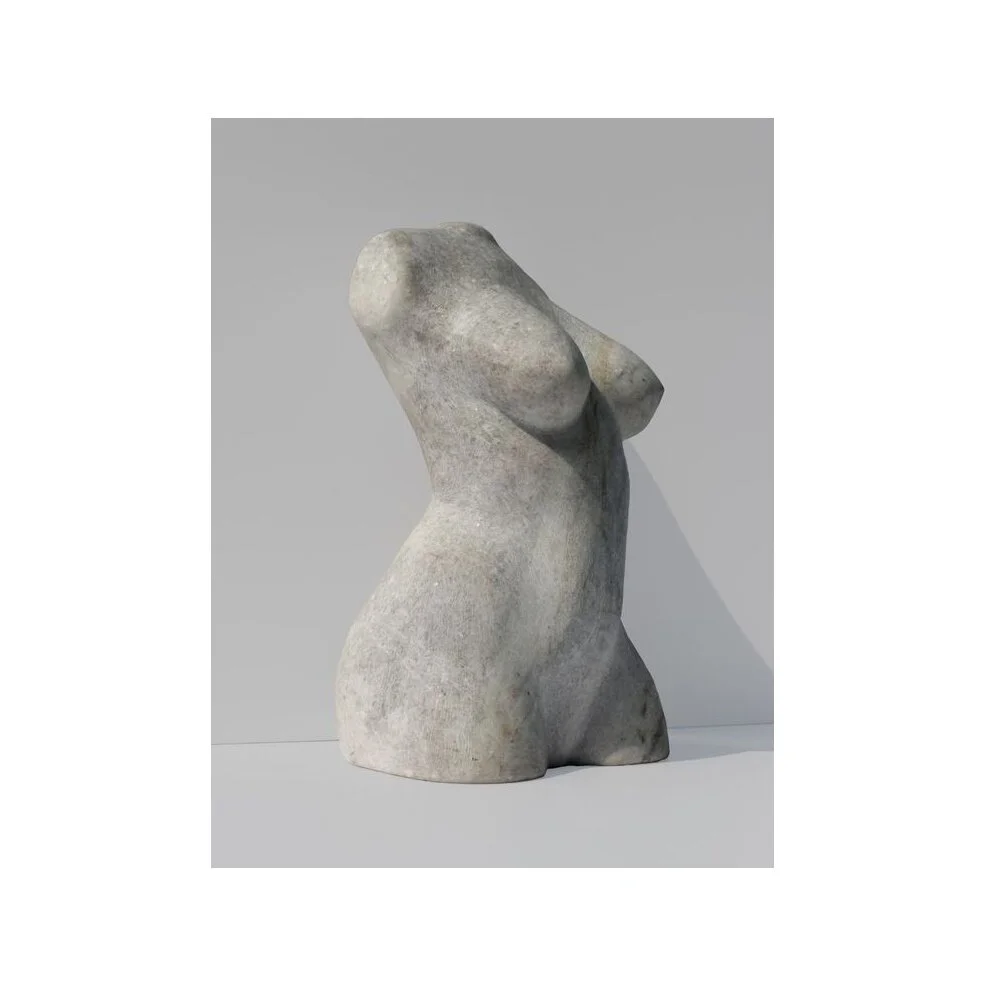
People often ask what makes a face beautiful.

I rarely begin with the eyes, the nose or the lips. I begin with the relationship between them.

Beauty is less about individual parts than the conversation they have with one another.

A single note cannot make music. Neither can a single feature make a face. The same is true beyond aesthetics.

A home feels beautiful when everything belongs.

A sentence reads well when each word supports the next.

A life feels peaceful when our decisions no longer compete with one another.

Perhaps beauty is another word for coherence.

Not perfection.

Just the quiet sense that nothing is asking to be different from what it is.

Perhaps beauty is another word for coherence.

DR SONAM YADAV
On Restraint: Why less is often more

The most difficult decision in medicine is often not what to do. It is what to leave alone. 

We live in a culture that mistakes intervention for progress.

If something can be improved, we assume it should be.

Nature disagrees.

A tree grows because it is pruned carefully, not constantly.

A garden becomes beautiful through editing as much as planting.

Faces are no different.

The best aesthetic work is often invisible. Not because nothing has changed, but because nothing essential has been disturbed.

Restraint is not the absence of action. 

It is the presence of judgment. 

That distinction interests me more every year.

Restraint is not the absence of action. It is the presence of judgment. 

DR SONAM YADAV
On Shadows: What lies beneath appearances

We spend much of life looking at shadows.

Medicine has taught me to look a little deeper.

The visible always points to something invisible.

A symptom is rarely the disease itself. It is a clue. Given enough attention, and the right questions, the deeper nature of things gradually reveals itself.

Over the years, I’ve realised the same is true beyond medicine. A face reflects years of decisions. A posture reveals habit. A room reveals the people who inhabit it.

Beauty is no different.

It is never just what we see.

It is the quiet consequence of what has been cultivated over time.

Perhaps that is why shadows fascinate me.

Not because they conceal the truth.

Because they remind us that every visible thing has a source.

Every visible thing has a source.

DR SONAM YADAV
On Attention: How we see

The best parts of life reveal themselves slowly.

I believe attention is generosity.

Not because it is difficult, but because it has become expensive.

We glance instead of looking. We skim instead of reading. We react instead of noticing.

Yet the best parts of life reveal themselves slowly.

As a physician, patients often ask me what makes a face beautiful. The longer I practise, the less I think beauty is a collection of features.

It is coherence.

It is ease.

It is the quiet feeling that nothing is asking for your attention because everything belongs.

A garden is not beautiful at first glance. Neither is a face. Nor a friendship. Nor a piece of writing. They ask something of us before they offer anything back.

Perhaps beauty isn’t simply something we find. Perhaps it is something our attention allows us to see.

Wherever attention accumulates, beauty has a chance to emerge.

DR SONAM YADAV
On Home: Where we return

Sometimes two books arrive at exactly the right moment.

One teaches you how to see.

The other teaches you how to return.

I’ve been reading In Praise of Shadows and The Odyssey. On the surface they couldn’t be more different. One is a quiet meditation on beauty. The other, one of the oldest stories ever told.

Yet they seem to be asking the same question.

How should we inhabit a life?

Tanizaki reminds us that not everything beautiful needs to be brightly lit. Some things ask us to slow down, let our eyes adjust, and discover what has been there all along.

Homer tells the story of a man trying to find his way home.

But perhaps the greater journey isn’t across the sea.

Perhaps it is back to oneself.

Lately I’ve realised that much of what I was searching for wasn’t another destination. It was a centre. A place from which to live, to create and to return.

I used to think home was somewhere I would eventually arrive.

Now I think it is something we gradually recognise.

Perhaps every life is an odyssey.

Not because we travel far. But because we spend so long learning where home has been all along.

Tanizaki reminds us that not everything beautiful needs to be brightly lit.

DR SONAM YADAV